Tag: roman history

Remarkable Romans – Corstopitum Roman Town

Just a short drive from St Oswald’s Farm, Corstopitum Roman Town offers an absorbing glimpse into life on the northern edge of the Roman Empire. Set at a key crossroads, the site developed into an important supply base and settlement supporting the nearby garrisons along Hadrian’s Wall. Its wide streets, substantial granaries and workshops reveal a place that was busy, organised and central to frontier life. Today, Corstopitum is a fascinating and rewarding place to explore and just one of the superb local Roman sites that can be enjoyed in the surrounding area.

As you begin to explore the site, the scale and detail of what remains quickly becomes apparent. The outlines of streets guide you through the town, while the towering granaries hint at the vast quantities of supplies that were once stored here. Fragments of everyday Roman life emerge along the way, from workshops and store buildings to carved stonework and inscriptions, inviting visitors to imagine the people who lived, worked and passed through Corstopitum nearly two thousand years ago.

Meeting the Corbridge Lion At Corstopitum

One of the most iconic artefacts at Corstopitum is the Corbridge Lion, a Roman sandstone sculpture believed to date back to the 2nd-3rd century AD. The lifelike carving shows a male lion poised over its prey, perhaps a deer, sheep or similar animal and was most likely originally created as decorative ornament, possibly intended for a tomb. The statue was very obviously later repurposed as a fountainhead as the mouth on the carving now shows, perhaps the Romans showing us then, how to re-use and re-purpose. Today the Corbridge Lion is one of the standout exhibits in the Corbridge Roman Site museum, offering a striking glimpse of Roman craftsmanship and the symbolic art of the period.

The Corbridge Hoard – An Extraordinary Roman Discovery

Another fascinating display within the museum is the Corbridge Hoard which was discovered just a few miles of Corstopitum and is one of the most remarkable Roman finds in Britain. Buried in the early 2nd century AD, the hoard was found packed inside a wooden chest and contained a carefully arranged collection of armour, weapons, tools, and personal items – including beautifully decorated metalwork and parts of a lorica segmentata (body armour). The way the objects were meticulously stored suggests they were deliberately hidden for safekeeping, perhaps during a time of unrest and then never recovered. Today, the hoard helps bring Corstopitum vividly to life, revealing not just the military presence at Corbridge, but the craftsmanship, organisation and everyday realities of Roman soldiers stationed far from home.

Beyond its most famous finds, Corstopitum has yielded a rich collection of artefacts that bring everyday Roman life into focus. Stone altars and inscribed building stones reveal the beliefs, regiments and individuals connected with the town, while coins trace its long period of occupation and change. Alongside these are practical objects such as tools, fittings and fragments of architectural stonework, offering insight into how the settlement functioned on a daily basis. Together, these quieter finds help build a fuller picture of Corstopitum as a working town – organised, lived in and closely tied to the demands of the northern frontier.

A visit to Corstopitum makes for a rewarding and unhurried day out, combining open-air exploration with some of the most fascinating Roman history in the region. After exploring the site and its museum, the nearby village of Corbridge is well worth time of its own, a great place to wander, with fantastic independent shops, cafés and welcoming places to eat as well as a lovely riverside walk.

Remarkable Romans – Chesters Roman Fort

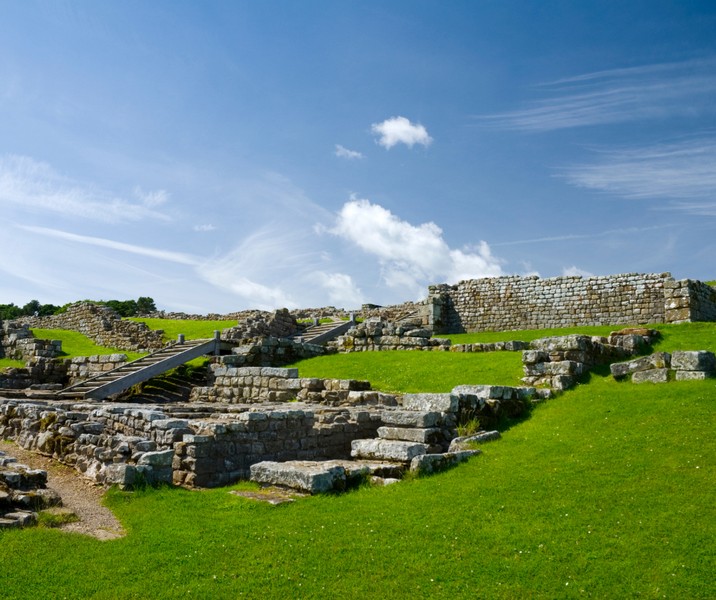
No trip to Northumberland would be complete without a visit to at least one of the amazing Roman sites along Hadrian’s Wall and just a 5 minute drive from St Oswald’s Farm lies the impressive Chesters Roman Fort which gives a remarkable window into Britain’s Roman past. As one of the best-preserved Roman cavalry forts in the country, Chesters offers visitors an unparalleled opportunity to step back nearly 2000 years and explore life at the edge of the Roman Empire.

Chesters Roman Fort, originally known as Cilurnum, was built around AD123 to guard a strategic crossing over the River North Tyne. This fort was home to a garrison of around 500 Roman soldiers who were tasked with defending this frontier of the Roman Empire. Today, Chesters stands as a testament to what can only be described as amazing Roman engineering and its well-preserved ruins invite visitors to imagine the daily lives of the soldiers who once patrolled these grounds.

One of the highlights of the Chesters site is the remarkable bathhouse area where you can explore the various rooms used for cold, warm and hot baths, and marvel at the advanced underfloor heating system, a sophistication that truly showcases Roman engineering!

alt="Chesters bath house changing area"
Bath House changing rooms! Image credit: Peter C Angus

As you explore this picturesque riverside location the remains of the commandant’s house provides a glimpse into the accommodation of the fort’s commanding officer and the size and layout of this structure highlights the status and importance of the fort’s leadership. Take a walk through the ruins of the soldiers’ barracks and stables where the Roman cavalry and their horses lived and trained which paints a vivid picture of life in this once bustling Roman military base. As you walk among its ancient stones and imagine the lives of the Roman soldiers who once called it home, you’ll gain a profound appreciation for the legacy of the Roman Empire in Britain.

Chesters museum and collections are housed in a Victorian building on-site and is a treasure trove of Roman artefacts from intricately carved altars and inscriptions to tools and personal items, the collection provides deeper insight into the lives of the Romans stationed at Cilurnum. The collection at Chesters contains 53 centurial stones which give the names of the centurions who, together with their men built Hadrian’s Wall. When you stay with us be sure to try to spot our Centurion stone that is built into the front of the farmhouse here together with a second engraved stone in one of our farm buildings.

When visiting Chesters you will undoubtedly spot the remains on the eastern river bank of a bridge and in fact the remains are not of one but two successive bridges, an early one that carried Hadrian’s Wall and a second, much larger one, that carried the Military Way, the road that serviced the Wall. This site is free to visit and can be accessed by a short walk either from Chesters or from nearby Chollerford and details can be found here.

alt="Chesters bridge abutment with clube skies and grassed riverbank"

Chesters Roman Fort isn’t just a historical site it’s a really lovely place to visit, so whether you’re a true history buff or just someone who wants to take in a little history in a pretty spot this timeless treasure in the heart of Hadrian’s Wall country won’t disappoint. For more Roman sites to enjoy see our posts on Vindolanda, Housesteads and The Roman Army Museum.

Discovering The Roman Army Museum

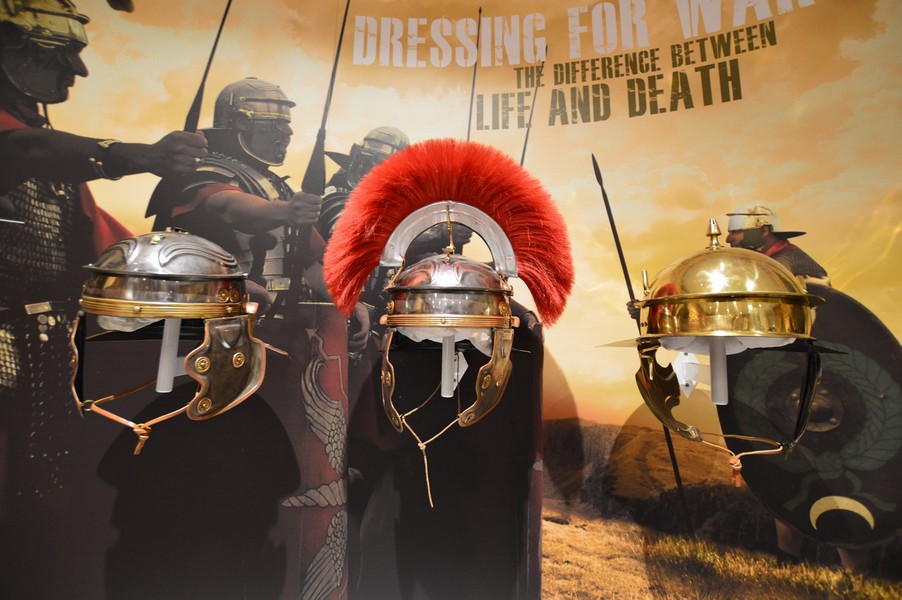
When you visit Northumberland you’ll find history tucked around every corner in our villages, towns and even throughout our lovely Northumbrian countryside with castles, bastles, forts and of course the most impressive piece of history of all, Hadrian’s Wall. The museums you will find along the wall corridor are as you would expect devoted to the Romans and Hadrian’s Wall and are packed with stories, treasures, finds and none more so than The Roman Army Museum which is the perfect place to start your Roman adventure as you discover life as a Roman soldier.

alt="Roman Army Museum display of roman helmets"

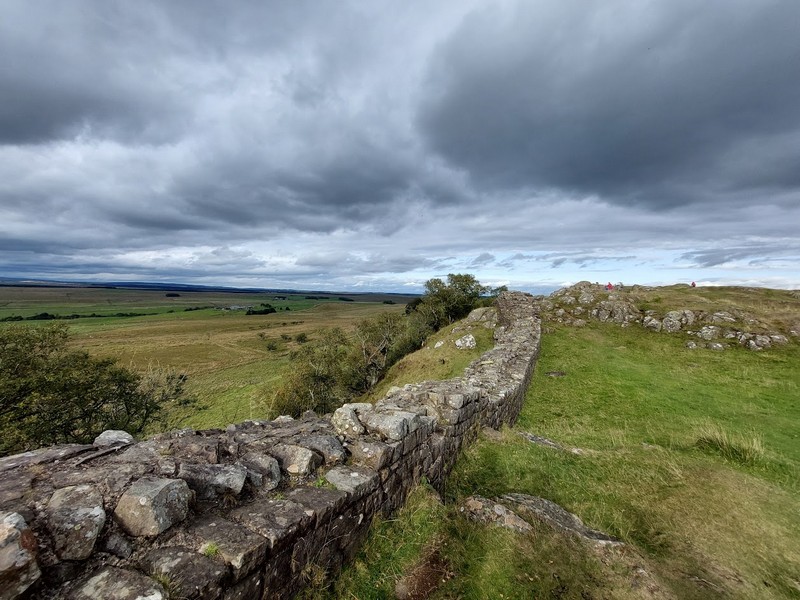
Set in magnificent countryside next to the highest standing and most complete and picturesque section of Hadrian’s Wall, the Roman Army Museum is owned and managed by the Vindolanda Charitable Trust and it brings to life wonderfully what it meant to live in this time of blood and brutality from both in and outside the Roman Empire.

alt="Hadrian's Wall near the Roman Army Museum"
Hadrian’s Wall near the Roman Army Museum

Start your journey in gallery 1 and walk straight into the role the army played within the Roman Empire, discover about the strength and variety of the different types of soldiers and admire real Roman artefacts brought over from the sister site of Vindolanda including the only Roman helmet crest ever to be discovered.

As you move through the museum and into Gallery 2 you will find the space devoted to Hadrian’s Wall and to the man himself, Hadrian. Learn about the successful invasion and occupation of Britain by the Romans and take the time to immerse yourself for 20 minutes as you watch the award winning 3D film ‘Edge of Empire’ which takes you flying over the Northumberland landscape and over Hadrian’s Wall and through a thousand years of history. See for yourself in incredible detail what life was like for the soldiers tasked with defending Hadrian’s honour, find out what it took to rise through the ranks, discover how the soldiers dealt with battle and boredom and what could happen if they dared to fall asleep, and why many just didn’t make it!

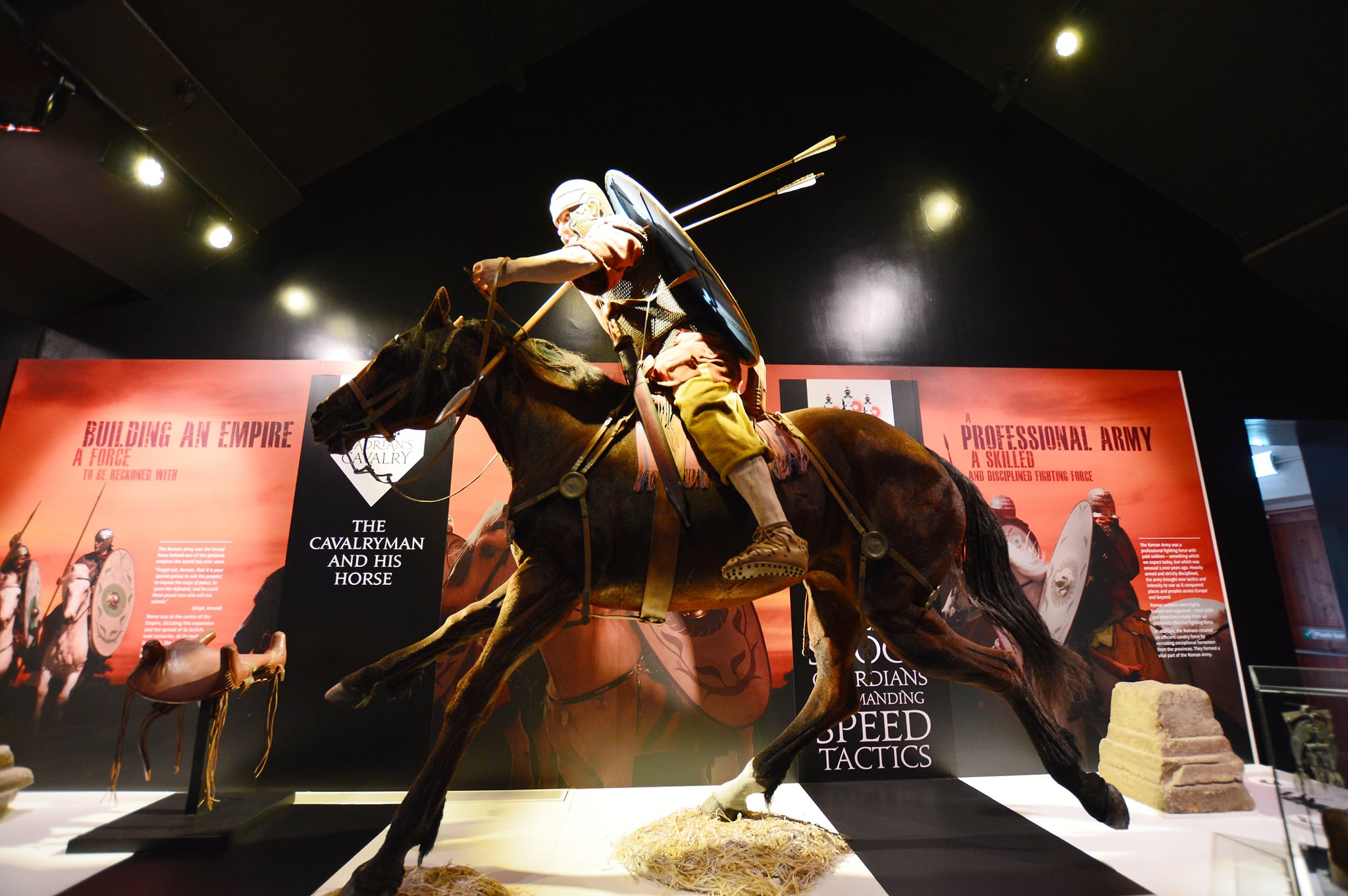
alt="Roman Army Museum model horse and horseman"

When you arrive in gallery 3 you’ll explore daily life on the frontier at the Roman fort of Magna. Find out about the training, food, religion, and what they did for leisure. Learn about the fort’s Syrian archers and even have a go at perfecting your archery skills.

In 2023 a five year research project started at the Roman Fort of Magna which sits behind the Roman Army Museum and during the summer months you can join one of the guided tours of the fort which lies hidden beneath the Northumberland landscape.

We highly recommend that you also visit the museum’s sister site Vindolanda Fort and just ask when you visit either and you’ll save on a joint ticket for both museums. If you have time don’t forget to take a walk up through Walltown Country Park just opposite the Roman Army Museum and take in this wonderful stretch of Hadrian’s Wall. The Roman Army Museum is fully interactive and immersive and a visit here together with a walk on the Wall and a trip to Vindolanda and you will be left in awe of what the Romans really did for us.

Exploring Housesteads

If you’re visiting Northumberland you will undoubtedly want to take in some of Hadrian’s Wall and there is nowhere better to appreciate this epic UNESCO World Heritage Site than at Housesteads Roman Fort.

Set high on a dramatic escarpment on Hadrian’s Wall, Housesteads was one of the16 permanent bases along Hadrian’s Wall and is the most complete example of a Roman fort in Britain. The fort is the most well known in the whole of the Roman Empire and is home to some of the most outstanding original features of a Roman fortress.

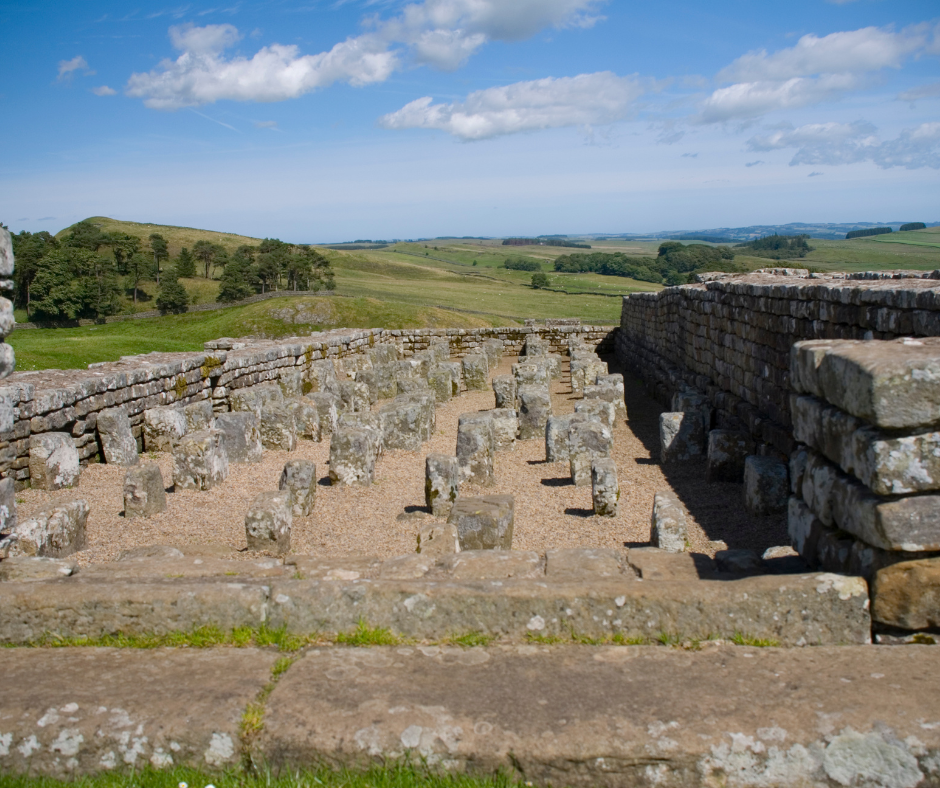
Although owned by The National Trust the site is run by English Heritage and their interactive museum showcases a great display of objects that once belonged to the Roman soldiers, and the short film that shows in the mini-cinema takes you on a journey through time as you watch the fort brought to life with stunning recreations of the original Roman buildings. You’ll get a real insight into Roman military life and discover the past behind the archaeological remains as you stroll around the barrack blocks, the Commander’s House, the granaries, the hospital and as you peer into the communal and undoubtedly the oldest toilets you’re ever likely to see.

A visit to Housesteads also gives the opportunity to enjoy a 5 mile circular walk which will take you past the site of Sycamore Gap following the Hadrian’s Wall National Trail before circling back to take you along the Roman Military Way.

Due to the nature of the site a visit to Housesteads involves a steep and uneven 750m walk from the car park, however the history of this ancient fortress together with the stunning panoramic views makes the walk worthwhile. A visit to Housesteads will leave you in awe of what the Romans achieved and gives real insight into the life of the soldiers based there and perhaps makes us realise just how tough and resilient they really were!