Category: Visitor Attractions

Discovering Morpeth

Northumberland is home to a number of market towns, each one boasting it’s own unique charm, character and many steeped in Northumbrian history. The town of Morpeth sits on the river Wansbeck and is only a half hour’s drive from St Oswald’s Farm. Morpeth is a bustling market town where history and traditional market town charm and independent retail meets with modern shopping centres and trendy wine bars. The cobbled streets, the markets, the walks and the park area together with a unique heritage all give the town an irresistible beauty.

A visit to any market town must include a spot of retail therapy and Morpeth doesn’t disappoint. You will find the Farmers’ Market in town on the first Saturday every month and the weekly charter market in the Market Place each Wednesday. As well the markets the town is packed with retail offerings, the Sanderson Arcade and the charming precinct together with Rutherford’s department store are perfect for browsing and picking up lovely gifts. There is a superb mix of independent shops together with some of your high street favourites.

If you’re seeking a green space Carlisle Park is centrally located in the town and is open every day so it’s always a great time to visit. It includes the William Turner Garden, tennis courts, bowling green, aviary and is home to one of only four working Floral Clocks in the country.

Take a walk up to the castle or there is mature deciduous woodland with lovely, but also very hilly woodland walks, there are even rowing boats if you fancy taking to the water and testing your rowing skills. Or of course Carlisle Park is the perfect spot for a picnic and to sit and watch the world go by!

If you visit in Spring Morpeth’s Bluebell Woods are beautiful when the woodland floor becomes carpeted with bluebells. Properly known as Howburun Woods are names for the How Burn which flows through them into the River Wansbeck. As well as the bluebells, expect to see an array of woodland plants, red squirrels, birds – and the occasional deer.

alt="bluebell carpeted woodland in Morpeth"
Bluebell Woods

As with all Northumbrian Market Towns there is a unique offering of history to enjoy and Morpeth is no different. Northumberland is the only county in England with its own dedicated musical instrument and Morpeth is home to a museum that celebrates and plays homage to our Northumbrian Pipes – a unique part of the heritage of Northumberland. Tucked away in a stunning 13th Century Grade 1 listed building is The Morpeth Chantry Bagpipe Museum which boasts a treasure trove of instruments and along with the fascinating displays, the museum often comes to life with regular live musical performances and ‘meet the piper’ sessions. The Chantry is also home to the Northern Poetry Library and Craft Centre and even the building itself has a story to tell, with townspeople once over having to pay a toll to the local priest to cross the river! You can still see the foundations of the town’s Medieval bridge in the river today.

alt="northumbrian pipes in museum in Morpeth"
The Chantry Museum – Home of the Northumberland Pipes

The town has plenty of free parking and with a great choice of places to eat or grab a coffee it’s the perfect destination for a day out. For more information on visiting this lovely Market Town please go to the More in Morpeth website.

If you enjoy the buzz of a market town just take your pick, as whichever one you choose you’ll be sure of a warm Northumbrian welcome.

What is Heavenfield?

As a local you would probably know, but as a visitor you’d be forgiven for wondering where the name of Heavenfield Cottage came from, however when we converted our old building into a luxury self-catering cottage, the name choice for us was obvious.

Heavenfield sits adjacent to our farm steading and is in fact our hay field. Not only does it have a lovely name but it is also special to us as we got married there! However, this pretty little field is immersed in history and was one of the most important sites in early northern Christianity. 

alt="kissing gate into heavenfield"
Heavenfield

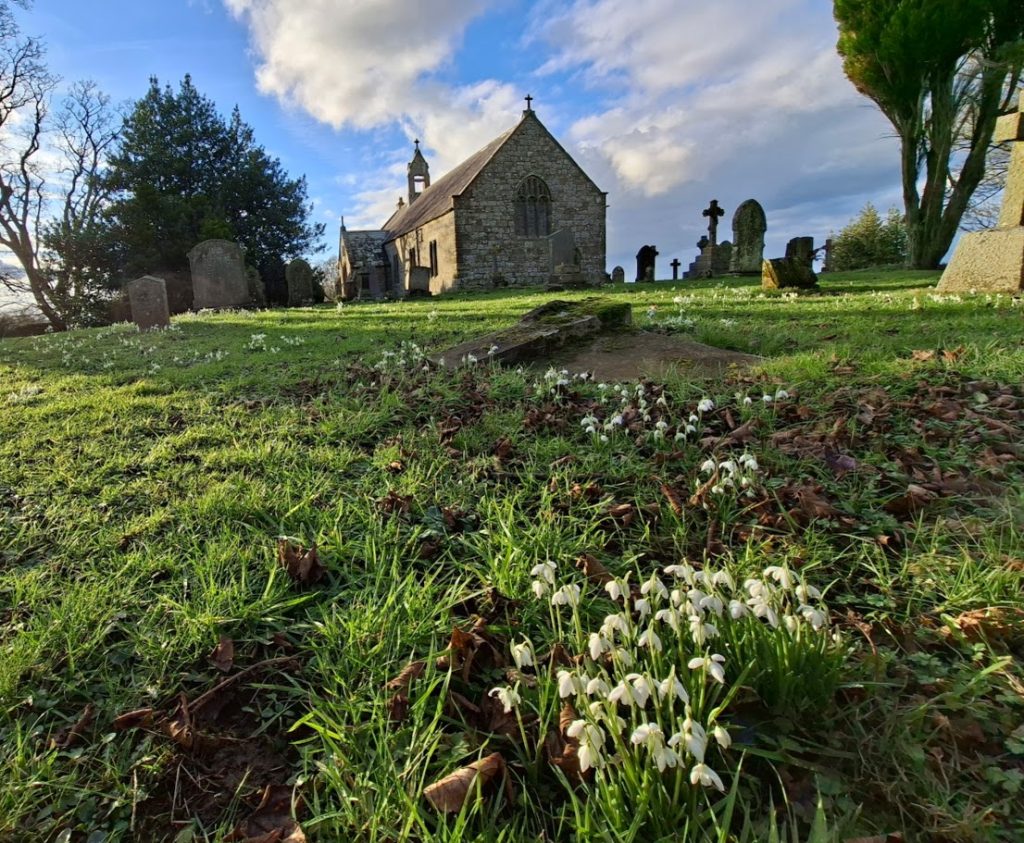
The site is believed to be the location where King Oswald (604-642) raised a large wooden cross before the Battle of Heavenfield in AD635. The battle defeated King Cadwallon ap Cadfon of Gwynedd and Oswald took a Northumbrian victory. A walled churchyard stands within the field and is home to St Oswald’s Church.

alt="large timber cross at heavenfield"

The church itself is a haven of peace and tranquility and, with no electricity, the church services held there a few times a year are lit by candles. The remains of a roman alter stone can be found inside the church and a large timber cross stands at the nearby roadside on the presumed site of the original cross erected by Oswald himself. Even today the church is a destination for pilgrims and there is an annual pilgrimage service from Hexham Abbey on St Oswald’s Day.

alt="inside St Oswald's church"

St Oswald’s Church is without doubt a special place and although the church we see now is primarily 19th century, the sense of age and history is palpable.

The rich history continues as the Hadrian’s Wall National Trail runs across the field and therefore the church is a very popular stop for walkers.

Heavenfield also marks the end of St Oswald’s Way which is a long-distance walking route, exploring some of the finest landscapes and fascinating history of Northumberland. The route links some of the places associated with St Oswald. From Holy Island (Lindisfarne) in the north, St Oswald’s Way follows the stunning Northumberland coast, before heading inland across beautiful countryside to Heavenfield and Hadrian’s Wall in the south, a distance of 97 miles. The route links castles, the coastline, islands, scenic river valleys, hills, attractive villages, forest and farmland.

alt="Heavenfield Church and churchyard with blue skies and snowdrops around the gravestones"
Walled Churchyard

To the rear of churchyard are the most breath-taking panoramic views looking towards the North Tyne and over to the Cheviot and Simonside Hills. There is a helpful visitor panel to ensure visitors enjoy each part of this amazing landscape.

alt="view from the back of the Heavenfield"
From the rear of the Church the view is outstanding

If the history isn’t enough, Heavenfield is now also a preserved hay meadow and, with a rare mix of wildflowers and grasses, we are delighted that St Oswald’s Farm is now within a higher level stewardship scheme to ensure these species are preserved.  Upland hay meadows are one of the rarest grassland habitats in the country, rich in wildlife and steeped in cultural traditions. The best time of year to see the meadow in all its glory is late May to late June.

alt="heavenfield at night"

Heavenfield is always a popular spot for photographers and with dark skies overhead there is often a tripod set up as darkness falls.  On a clear night it is nothing short of stunning and certainly worth staying up for.

Heavenfield has also made a few TV appearances and has featured in Robson Green’s Further Tales of Northumberland, the TV series ‘Pilgrimage’ and even ‘Vera’ and her trusty old Landrover paid a visit to this remote and remarkable little field we call home.

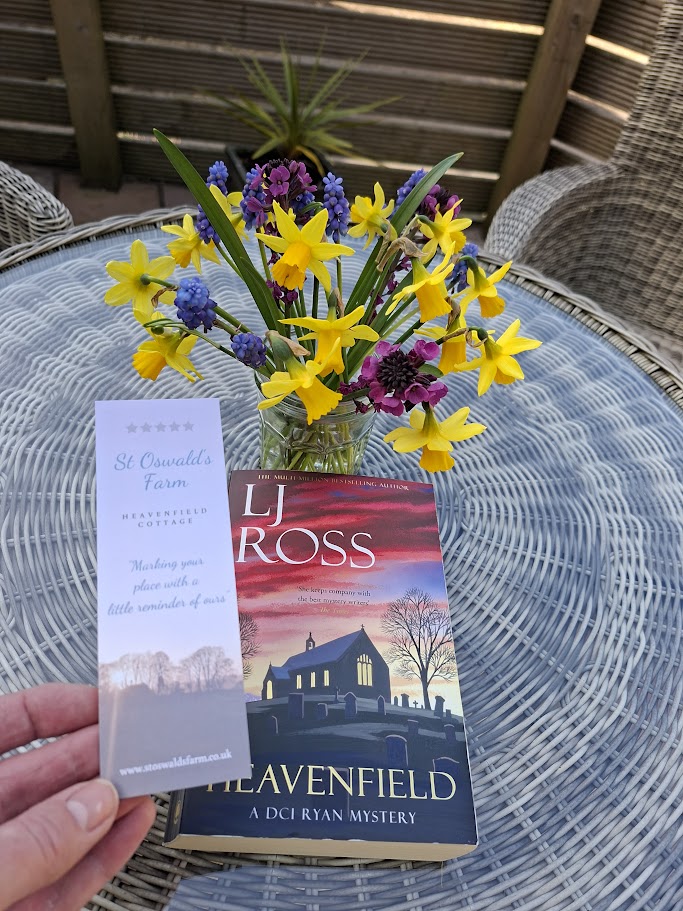
alt="the book Heavenfield on a table with bookmark and flowers behind"

LJ Ross the author of the international No1 best-selling series of DCI Ryan mystery novels based one of her DCI Ryan books at the church and named it Heavenfield.  It is of course therefore fitting that this series of books can be enjoyed by our guests here at St Oswald’s Farm.

Heavenfield is so much more than just a field and so much more than just a name we thought up. We hope that visitors to the church, to Heavenfield and to St Oswald’s Farm enjoy it as much as we do and feel the sense of peace and tranquility that can be found here. 

If you’d like to stay in Heavenfield Cottage you can find out more about the area and the cottage together with prices, availability and book to stay with us here