Tag: visit northumberland

Exploring Northumberlandia

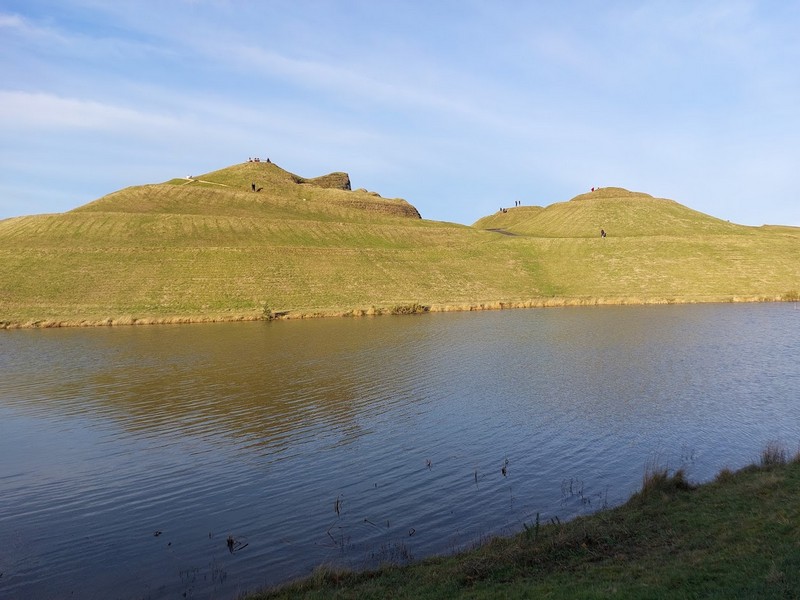
Northumberlandia is a unique and stunning piece of public art set in a 46 acre country park which lies near the town of Cramlington and a 35 minute drive from St Oswald’s Farm. ‘The Lady of the North’ as she is more affectionately known is the world’s largest human landform sculpture and is made of 1.5 million tonnes of rock, clay and soil and is 100 feet high and a quarter of a mile in length. There are 4 miles of footpaths on and around the landform centrepiece and the paths follow the curves of this reclining female form and there viewing platforms that offer great views. The Shotton Surface mine can also be seen from the top of Northumberlandia which is perfect for fans of big machinery!

alt="Northumberlandia lady of north profile and lake"
The lady of the North

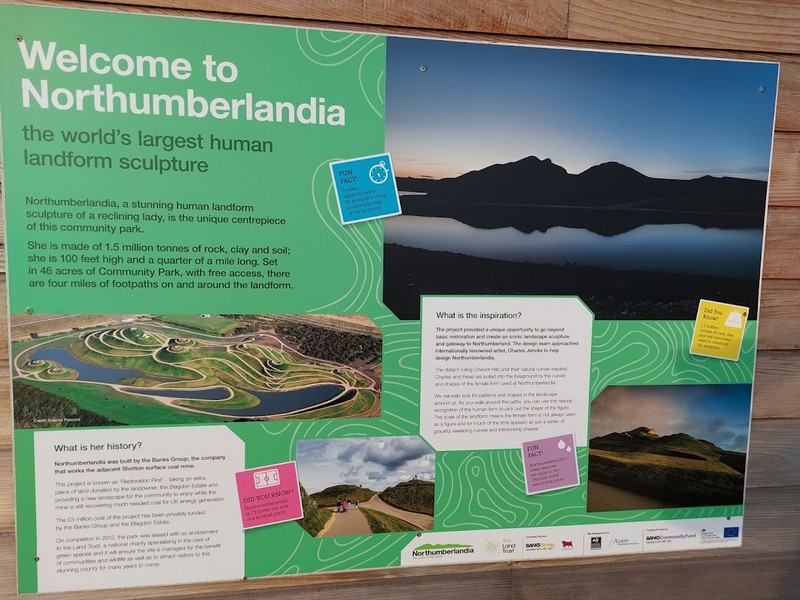
This ambitious piece of public art and landmark feature were designed by world renowned artist and architect Charles Jencks and the inspiration for the landform comes from the distant Cheviot Hills. The whole history of Northumberlandia and how the project came about is detailed on lots of information boards and it’s fascinating to learn the story behind the ‘lady’ and see the images of the build and transformation that took place.

Northumberlandia was designed to be a living part of the countryside and you won’t find this artform in any way manicured but what you will find is a structure that blends into the landscape and something that will mature over time and change with the seasons. What you see when you visit is only the start of something that will evolve and develop through generations to come.

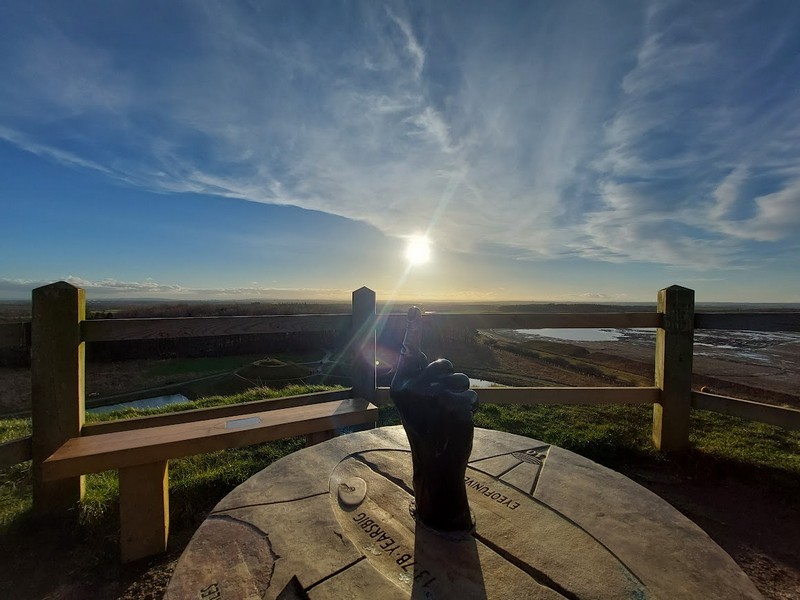
alt="View from top of Northumberlandia with low winter sun"
You can see for miles from the top of Northumberlandia

The sculpture, country park and woodland trail are open from dawn ’til dusk each day with free entry and parking on site together with a small cafe and loos. Northumberlandia also has a packed programme of food and craft markets and other events throughout the year and details can be found on their website. Northumberlandia is definitely worth a visit and is only a couple of miles from The Milkhope Centre which is a perfect stop for lunch at ‘The Blacksmiths’ and a browse around the small artisan shops.

Beautiful Belsay

Belsay Hall, Castle and Gardens sit tucked away in the very small but perfectly formed village of Belsay, however there is nothing small about this beautiful English Heritage property with it’s grand Grecian Hall, Medieval Castle and 30 acres of enchanting gardens.

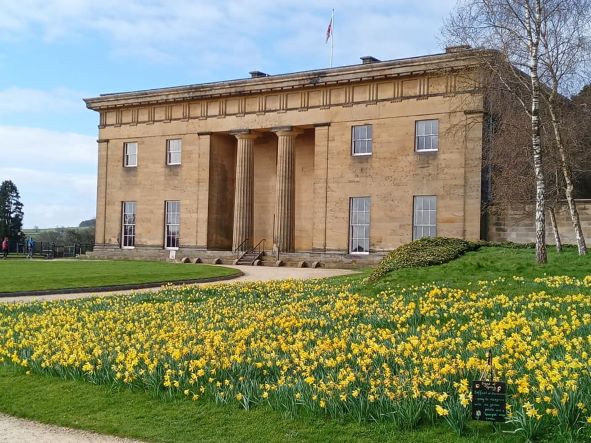
The Grand Hall is an architectural masterpiece, influenced heavily by the temples of ancient Greece, this country house is a true spectacle. Whilst the building itself is unfurnished, beautiful floral print wallpaper from the 1800’s still lines the walls, and from the bedrooms you will enjoy incredible views over rest of the estate. The empty rooms lend themselves to the art installations which are sometimes resident. The Hall with it’s impressive columns was built using rocks from the quarry on the Belsay grounds and was completed in the early 19th century.

alt="Belsay Hall Grecian mansion"
Belsay Hall

The gardens at Belsay are an absolute highlight and with year-round seasonal interest meaning you’ll be impressed whatever time of the year you visit. With one of the biggest collection of rhododendrons in the country you’ll find winter flowering varieties in the Quarry Garden and a magnificent display in the Rhododendron Garden during late Spring. A walk through the ravines cut out of rock bring a jurassic-feeling to the Quarry Garden and with its own microclimate you’ll see all sorts of exotic plants. The formal Yew Garden and Magnolia Terrace bring an entirely different experience and here you will witness the recent restoration by the dedicated garden team who have restored much of the historic fabric of these areas, opening up historic views and restoring biodiversity.

alt="Belsay Hall Quarry Garden"
Quarry Gardens

After visiting the Hall and a meander through the acres of gardens you will find an impressive medieval castle and although in ruins the grandeur of what the castle once was is very evident. Slowly wander through the maze of rooms and you will be treated to traces of elaborate medieval wall paintings. In the manor house style wing you can still see the old cooking range and fireplaces and if your legs are up to it, take the 56 spiral stairs to enjoy the view from the top of the 14th-century defensive ‘pele tower’.

alt="Belsay Hall Castle"
Belsay Castle

Of course any day out wouldn’t be complete without refreshments and Belsay Hall itself has a Victorian Tearoom which is in the hall’s original kitchen and offers lunches and light bites. Alternatively there is a gorgeous independent coffee shop in the village of Belsay, The Blacksmiths Coffee Shop who provide a wide range of home made produce such as scones, sandwiches, quiches, baked potatoes, pies, salads, tray bakes, cakes and much more, although we recommend that you book in advance to be sure to get a table.

To find out more about Belsay Hall and for information on opening times or if you wish to book your visit please go to their website.

If you enjoy days out and taking in the grandeur of historic houses and the beauty of their surrounding garden then a stay in Northumberland is definitely for you. All our availability is up to date on our website so all you have to do is book your stay and look forward to enjoying all Northumberland has to offer. We can’t wait to welcome you here.

Discovering our Museums – Woodhorn

Woodhorn Museum brings to life Northumberland’s proud mining heritage and is set on the site of what was once the largest pit village in the world. Woodhorn however is more than just a traditional mining museum, the exhibitions, the collections, tours, talks and facilities together with a packed programme of events ensure a great day out.

alt="Woodhorn museum main building"
Woodhorn Museum

Many of the colliery buildings still remain and are open for you to explore and each of these buildings tell their own fascinating story. Stand above the staggering Heapstead, find out what steam power did in The Jack Engine House, sniff out the Stable Block, see the only remaining Cappell Fan in existence in the Cappell House and Motor Room and discover the vital role of the winderman in The Winding House.

There are many exhibitions and collections of interest on offer at Woodhorn Museum. Coal Town is one of the permanent exhibitions and this interactive and thoroughly moving exhibition takes you on a journey where you’ll discover the true story of coal mining in Northumberland and of a way of life that has disappeared forever.

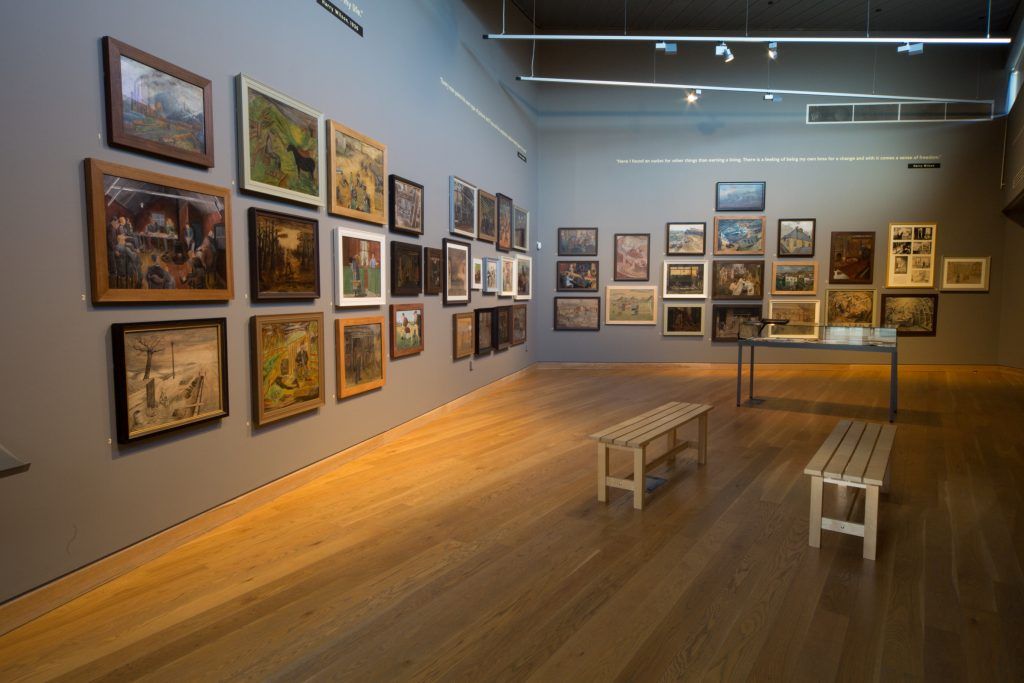
Take in the unique art collection by the amateur yet famous art group The Ashington Group, also known as the ‘Pitmen Painters’. They began as an art appreciation group in the 1930’s and then went on to meet weekly over the next 50 years and produced hundreds of paintings depicting what life was like for the men and women who lived and worked in the mining communities in Northumberland.

alt="woodhorn museum pitmans gallery"
Pitman Painters Gallery at Woodhorn Museum

You can enjoy the museum at your own pace or if you prefer there are tours and talks that take place daily to help you explore the various parts of the museum. Please check the website or ask staff about times and how to join these tours and talks.

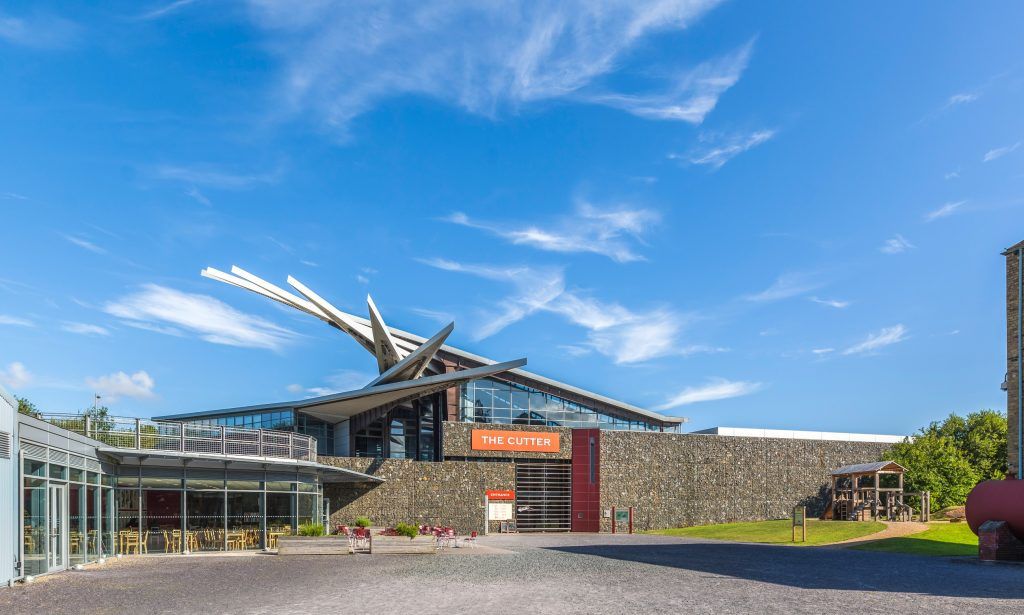
At Woodhorn Museum the much loved heritage blends seamlessly with more modern development and The Cutter Building which is home to exhibitions and collections includes a wall which features a moving sculpture of 98 birds made from moulded miners’ gloves with each one sadly representing the lives lost at the colliery throughout it’s history. Woodhorn Museum is informative, interactive, cultural, hands on and at times really quite thought provoking but more than anything it’s a really enjoyable day out.

alt="woodhorn museum the cutter building"
The Cutter Building at Woodhorn Museum

If history, heritage and culture is what you enjoy then look no further and book your stay at St Oswald’s Farm and discover all that Northumberland has to offer.

More Gorgeous Gardens

Northumberland has so many gorgeous gardens to visit that there is undoubtedly a garden for everyone to enjoy. As well as the better known and larger gardens there are many more that are perhaps not quite so well known but that are quietly and discreetly waiting to be discovered and admired.

Longframlington Gardens near Morpeth offers a lovely place to visit, so whether you’re looking for plants to buy and take home or just looking for a unique garden to visit during a day out, these gardens are great stop off and with a coffee shop too. They were established over 20 years ago and were originally green pasture fields and over the years have gone on to be developed in phases. There are 12 acres of walks, landscaped gardens & arboretum, ponds, garden art, nature & garden trails, information displays & a wild meadow and boasting over 1000 different types of trees shrubs and perennials all set in the peaceful Northumbrian countryside. The ‘Garden & Arboretum Walk’ gives you the opportunity to take in the plant collection and the seasonal changes of the planting schemes, in their ‘Living Exhibition of Plants’. For more information and a to download their leaflet please go their website.

For a garden visit of a different type, Dilston Physic Garden is a must see. Dilston is a unique and modern physic garden tucked away in the beautiful Northumberland countryside and only a few miles from our local town of Hexham. There are currently only 6 other gardens of this type in the UK including the Chelsea Physic Garden in London.

Grounded in the science of how each plant works, throughout the physic garden you will find over 700 plants each with informative signboards. These not only show the traditional and modern plant medicine use, but also the science and active ingredients, as well as the folklore and magic that brings each plant to life!

Dilston is full of surprises, sculptures, art, places to ponder, events, you can chat with a herbalist, enjoy a tour, taste their popular speciality teas or even take a snooze on the soft and fragrant Chamomile Lawn. Dilston is a place for wellbeing and a tranquil space to calm the mind. More details of this lovely hidden treasure can be found here.

Whalton Manor Gardens near Morpeth are an absolute gem. You will find a 17th century house with a three-acre garden that is bursting with inspirational planting and magnificent architectural structures, such as the charming Lutyens-designed, Italianate summerhouse, game larder, pergolas and vast stone-paved courtyard. The gardens are open for individual private viewings on Tuesdays and Wednesdays from April to October but must be pre-booked in advance, for more details please go to their website. Why not combine this with a visit to the nearby Belsay Hall.

Bide-a-Wee Cottage Gardens near Netherwitton are a must for all those that enjoy gardens with imaginative planting. The gardens contain a huge variety of herbaceous plants, shrubs, ferns and grasses planted in both a formal and informal style. Bide-A-Wee Garden was created from a small sandstone quarry over the last 25 years with the site once originally bare and exposed apart from rough grassland and gorse. It has undoubtedly been a project which has taken years of careful planning, hard work and love to transform this former grassy and rough site into the garden oasis you see today. This garden is in the perfect countryside setting and a great place to enjoy the peace and tranquility while taking in the views of the garden and of course the stunning Northumbrian countryside.

To enjoy these gorgeous gardens together with the other visitor attractions, the fantastic roman history, stunning scenery and coastline, walks, dark skies and more just book your next stay and look forward to enjoying all Northumberland has to offer. You can check availability and prices of our lovely Heavenfield Cottage here. We look forward to sharing our Northumberland with you soon.

Discovering our Museums – Beamish

St Oswald’s Farm is so well placed for days out in Northumberland and there is so much to see and to do and experience across the County and the whole of the North East. So whether you stay for a weekend, a week or two weeks you won’t be short of places to visit and enjoy. If you like to soak up the history and enjoy discovering museums during your time away then Northumberland most definitely won’t disappoint! Our museums are all so very different and many bring to life the lives of the people who once lived and worked here, and none more so than Beamish, an astonishing living and working museum set in over 300 acres of beautiful countryside in nearby Durham.

alt="Beamish pit village and countryside"
The Pit Village – Beamish

Beamish – The Living Museum of the North is a world famous open air museum which tells the story of life in North East England during the 1820s, 1900s, 1940s and 1950s. “A living, working museum that uses its collections to connect with people from all walks of life and tells the story of everyday life in the North East of England”. And my goodness is certainly does, and in the best and most imaginative way ever!

You will step back in time when you visit Beamish, it is nostalgic, authentic, factual, enchanting, everything about it is interactive and engaging, you can’t help but be in awe of it’s scale and fond of it’s charm.

Hop on the tram and discover how families lived and worked in the years leading up to World War 1 in the 1900’s town, it’s everything a town should be. A bank, the printers, a well stocked Co-op, the Masonic Hall, a chemist and the town stables. See vintage cars, motorcycles and bikes in the replica early 1900’s garage, call in at Herron’s Bakery and watch bread and cakes being made using traditional recipes or pop into Jubilee confectioners and see ‘ye olde fashioned sweets’ being made and of course there’s plenty to tempt you if you would like to take some treats to take home. Buy a pint in The Sun Inn, try your hand at games at the fairground or enjoy a picnic by the bandstand in the Town park and if you time it right, the brass band will be playing too.

alt="horse and cart at Beamish"
Horse and cart at Beamish

Mining was a huge part of North East life and the 1900’s Colliery and Pit Village depict the life of the men and boys and ponies who worked the mines and how families lived in a pit village. Admire the well tended vegetable gardens, grab a takeout at the local fish and chip shop, visit the chapel or go to school, you can even test your skill with the ‘booler’ in the school yard. You might need a Geordie dictionary to know what a booler is!

Jump back on board the bus or tram and head to the 1940’s farm where you can walk through the homes of those living an everyday domestic life during wartime. See how evacuees adjusted to living a rural life and what life was like for the land girls. The farmhouse, the cottage, the old farm implements and buildings, be sure to take note of the pig troughs at the farm, they once resided here at St Oswald’s Farm, and in fact they were where our house is now, before being given to Beamish around 50 years ago.

alt="old tractor at Beamish"
Life on the 1940’s farm

A visit to Beamish is a full day out with so much to explore and see and set over such a large area, be sure to wear comfortable shoes, as there’s lots to walk around and you wouldn’t want to miss a single bit! It’s around an hour’s drive from St Oswald’s and we would recommend planning a whole day there to be sure you are able to enjoy it fully. There’s plenty of loos and places to grab a bite to eat and plenty places to sit and enjoy a picnic if you would prefer. For all the details of visiting Beamish please check their website for up to date information and current guidance.

Whatever your interest you’ll be sure to find plenty to see and do in the North East and of course if you need any help or guidance on where to visit you just need to ask and we’ll be happy to help. We look forward to welcoming you here very soon!

Discovering our Museums – Vindolanda

St Oswald’s Farm is so well placed for days out in Northumberland and there really is so much to see and do across the County and the whole of the North East. So whether you stay for a weekend, a week or two weeks you won’t be short of places to visit and enjoy. If you like to soak up the history and enjoy discovering museums during your time away then you most definitely won’t be disappointed!

The wealth of museums is endless from the Aviation Museum at Bamburgh Castle to the National Trust property Cherryburn which was the birthplace of artist Thomas Bewick, to Blyth Battery, the Grace Darling Museum and of course the many museums along Hadrian’s Wall boasting more Roman artefacts than you can begin to imagine. The Ferryman’s Hut in Alnmouth is said to the be the country’s smallest museum and the nearby town of Hexham boasts the oldest purpose built Gaol in England with the market town of Morpeth holding claim to a dedicated bagpipe museum!

Of course any trip to Northumberland wouldn’t be complete without delving into our vast Roman history and we are lucky enough to have the Roman Vindolanda Fort & Museum only a short 20 minute drive from St Oswald’s Farm. This is one of Europe’s most important Roman archaeological sites and is situated on the Stanegate Road, one mile south of Hadrian’s Wall and is set in a stunning landscape which really allows you to feel and connect with this inspiring historic site.

alt="Discovering our museums Vindolanda site"
Vindolanda – Nine forts over nine centuries

Vindolanda comprises of nine forts built on top of each other over nine centuries with the visible stone fort dating back to the third century. The site includes a modern world class museum which tells the vast and interesting Roman story and the museum is constantly updated and changes with annual archaeological finds added as a result of the ongoing excavation programme.

The Vindolanda tablets are perhaps Vindolanda’s greatest discovery and have been voted as ‘Britain’s Top Treasure’. These delicate, wafer thin pieces of wood covered in spidery writing were were found in the oxygen-free deposits in the floors of the deeply buried early wooden forts at Vindolanda and are the oldest surviving handwritten documents in Britain.

alt="Discovering our museums vindolanda replica roman temple"
Replica Roman Temple at Vindolanda

The Vindolanda Excavations take place every year between April & September and attract hundreds of volunteers from all over the world and visitors are welcome to watch the excavations as they take place, you might be lucky enough to be there when the next major Roman artefact is discovered and dug up from the ground. Of course if you want to get stuck in yourself you can book to take part in the excavations but they do book up quickly. More details can be found here with the 2021 dates released at the end of this year.

alt="discovering our museums vindolanda excavation site"
Excavations underway at Vindolanda Image credit :Vindolanda

You could easily spend more than half day embracing all that’s on offer at Vindolanda and with an on site café offering a range of hot and cold drinks as well as snacks, lunches and afternoon tea it’s the perfect way to spend a day out come rain or shine! 

Whatever your interest you’ll be sure to find so much to see and do in Northumberland and of course if you need any help or guidance on where to visit you just need to ask and we’ll be happy to help.

For all availability and details of Heavenfield Cottage please go to our website. We hope to see you soon.