The Bowes Museum is a hidden treasure, a jewel in the heart of beautiful Teesdale. The magnificent building stands proud in the historic market town of Barnard Castle housing internationally significant collections of fine and decorative arts. Purpose built in the 19th century by John and Joséphine Bowes, this Museum has a wonderful story to tell.
The Museum is a unique cultural icon and is one of the most important museums outside London, it’s wonderful history and it’s outstanding collection of treasures span three exquisite floors.
The walls of the picture galleries are covered with a huge collection of world class paintings, many of which are priceless masterpieces, ranging from the smallest and oldest, Sassetta’s Miracle of the Eucharist (c1423) to the eye-popping sized Canaletto-double.
Image Credit – The Bowes Museum, Barnard Castle
The fashion collections take you on a journey from the 17th to 20th centuries with the displays fashioned in a manner which enable you to get a sense of time. The treasures include The Blackborne Lace collection, one of the largest and most important lace collections in the world. Shoes and garments are displayed on transparent acrylic mounts which enables a glimpse into the making of the garments with a view of the linings and labels which are normally hidden from sight.
Amongst the many collections there are a number of mechanical toys, music boxes and watches with automaton movements but perhaps the most well known and popular attraction is the clockwork Silver Swan which has been resident at the museum since it opened in 1892 apart from when packed away for safety during World War II. Unfortunately The Swan was a casualty of Covid regulations and due to the lack of use at that time is now undergoing maintenance, hopefully she will be performing and delighting visitors again soon.
The permanent collections are complemented by an eclectic exhibition and events programme and there are guided tours most days that you may wish to take advantage of, but places do need to be booked in advance.
Whatever time of day you visit Cafe Bowes is perfect for a quick bite, a leisurely lunch or delicious afternoon tea, and a day at The Bowes Museum wouldn’t be complete without a walk around the 20 acres of gardens, take in everything from woodland walks to the formal parterre garden which completes the look of this stunning French Chateau style building. If you love museums then a visit to The Bowes Museum will not disappoint.
We look forward to welcoming you to St Oswald’s Farm and hope you enjoy all the North East has to offer.
Northumberland is home to a number of market towns, each one boasting it’s own unique charm, character and many steeped in Northumbrian history. The town of Morpeth sits on the river Wansbeck and is only a half hour’s drive from St Oswald’s Farm. Morpeth is a bustling market town where history and traditional market town charm and independent retail meets with modern shopping centres and trendy wine bars. The cobbled streets, the markets, the walks and the park area together with a unique heritage all give the town an irresistible beauty.
A visit to any market town must include a spot of retail therapy and Morpeth doesn’t disappoint. You will find the Farmers’ Market in town on the first Saturday every month and the weekly charter market in the Market Place each Wednesday. As well the markets the town is packed with retail offerings, the Sanderson Arcade and the charming precinct together with Rutherford’s department store are perfect for browsing and picking up lovely gifts. There is a superb mix of independent shops together with some of your high street favourites.
River walkCarlisle Park
If you’re seeking a green space Carlisle Park is centrally located in the town and is open every day so it’s always a great time to visit. It includes the William Turner Garden, tennis courts, bowling green, aviary and is home to one of only four working Floral Clocks in the country.
Take a walk up to the castle or there is mature deciduous woodland with lovely, but also very hilly woodland walks, there are even rowing boats if you fancy taking to the water and testing your rowing skills. Or of course Carlisle Park is the perfect spot for a picnic and to sit and watch the world go by!
If you visit in Spring Morpeth’s Bluebell Woods are beautiful when the woodland floor becomes carpeted with bluebells. Properly known as Howburun Woods are names for the How Burn which flows through them into the River Wansbeck. As well as the bluebells, expect to see an array of woodland plants, red squirrels, birds – and the occasional deer.
Bluebell Woods
As with all Northumbrian Market Towns there is a unique offering of history to enjoy and Morpeth is no different. Northumberland is the only county in England with its own dedicated musical instrument and Morpeth is home to a museum that celebrates and plays homage to our Northumbrian Pipes – a unique part of the heritage of Northumberland. Tucked away in a stunning 13th Century Grade 1 listed building is The Morpeth Chantry Bagpipe Museum which boasts a treasure trove of instruments and along with the fascinating displays, the museum often comes to life with regular live musical performances and ‘meet the piper’ sessions. The Chantry is also home to the Northern Poetry Library and Craft Centre and even the building itself has a story to tell, with townspeople once over having to pay a toll to the local priest to cross the river! You can still see the foundations of the town’s Medieval bridge in the river today.
The Chantry Museum – Home of the Northumberland Pipes
The town has plenty of free parking and with a great choice of places to eat or grab a coffee it’s the perfect destination for a day out. For more information on visiting this lovely Market Town please go to the More in Morpeth website.
If you enjoy the buzz of a market town just take your pick, as whichever one you choose you’ll be sure of a warm Northumbrian welcome.
Isn’t Autumn just the most glorious time of the year? Crunchy leaves, misty mornings, crispy air and with a myriad of colours sweeping over our trees, woodlands, gardens, hedgerows, fields and even across our skies. Autumn is definitely not the time to hibernate.
Early morning at St Oswald’s Farm
Northumberland is renowned for its walks and trails right across the County from coast to country, from remote moorlands to river walks, Northumberland offers the very best in walking opportunities. For hardened walkers Autumn brings a new dimension to each walk with a kaleidoscope of colours to indulge in and for those who enjoy more of a gentle stroll there’s no better time than Autumn to breathe in the great outdoors. Whatever your walking level or experience we can guarantee Northumberland has a walk for you.
Tyne Green in Hexham
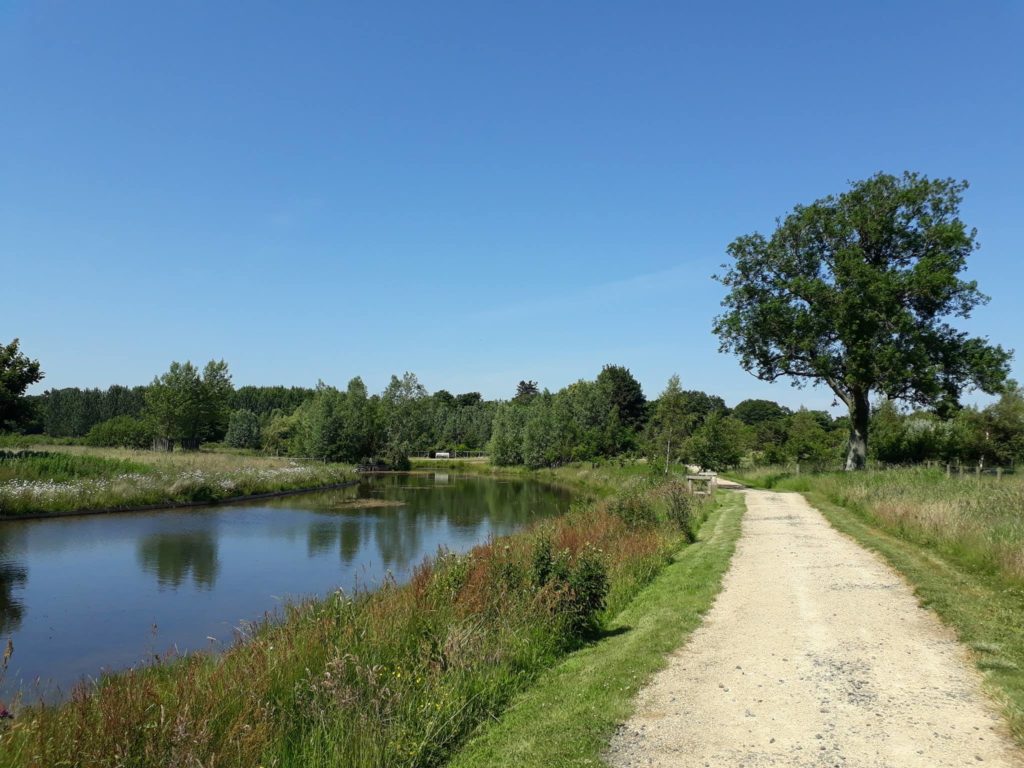
You don’t need to travel far from our back door to enjoy the River Tyne. One of Hexham’s nicest green spaces is Tyne Green and it is the most tranquil of places to enjoy, this long river walk at any time of the year is lovely but bathed in Autumn glory it’s nothing short of beautiful.
Further east, the River Tyne takes you to Wylam and to Hagg Bank which is dominated by an impressive single span arch bridge, this former railway bridge is now a footbridge only. The walk East, Keelman’s Way (cycle route 141), stretches from Wylam to Newburn and can be accessed from either end or you may wish to explore the river stretch from Prudhoe to Wylam taking in sights such as George Stephenson’s Cottage and Prudhoe Castle along the way.
Hagg Bank at Wylam
The walks at Allen Banks & Staward Gorge are a must-see in Autumn. The gardens and woodlands are owned by the National Trust and are the largest area of ancient semi-natural woodland in Northumberland. This beautiful wooded gorge that follows the River Allen has many different walks to enjoy with miles of paths, most are signed, however some are fairly steep and in places can be a little uneven. Amongst this ancient and ornamental woodland not only will you discover wildife and fauna but also ancient monuments and perhaps even a summer house! Make sure to grab a map available from the car park to keep you on the right path. For current opening times and parking details please check their website before visiting. Top tip – afterwards head to Bardon Mill Village Store & Tearoom for hot drinks, light lunches and cake!
Allen Banks & Staward Gorge in Autumn
The Simonside Hills in Northumberland National Park are perhaps the most recognisable hills in the County and as the Autumn months approach they bring just an expanse of purple beauty across the heather moorland. There is a circular 7km walk to the summit and although the route across the woodlands and moor are classed as moderate it is oh so worth it. At the summit you will encounter 360 degree view and be able to take in the Cheviot Hills, Coquetdale and over to the North Sea coastline. You will find details of parking and route guidance on the National Park website.
Simonside Hills
It’s hard to choose our favourite place to visit in Autumn, Gibside with its long tree lined avenue or the charm of Belsay Hall and the colours that appear across the gardens and surrounding woodlands at this time of year. Or perhaps our favourite is Cragside House & Gardens which despite the many evergreens amongst their 7 million trees they just seem to highlight and compliment the display of Autumn colours. Talkin’ Tarn is lovely for a gentle walk around a lake but then so is Bolam Lake and there’s Blanchland …if only Autumn lasted longer. There’s always next year when nature will do it for us all again!
Whatever or wherever you choose to walk during your Autumn stay we can guarantee you will ‘fall’ for the charm of Northumberland.
Talkin’ TarnCragsideBolam Lake
Heavenfield Cottage is the perfect base for all your Autumn days out and just perfect to return back to following a day in the great outdoors. With underfloor heating, a log burning stove, a deep double ended bath, walk-in rainforest shower, fluffy bathrobes, the biggest most comfortable bed with luxury bedding, oh and there’s even somewhere to dry your boots! Sound good? All our Autumn availability can be found here.
We look forward to welcoming you to St Oswald’s Farm.
EDIT…in September 2023 in a dreadful act of vandalism our beloved tree was felled, the devastation, disbelief and sadness has been felt not only locally but right across the world. There are now plans to create a series of initiatives designed to mark the legacy of the tree and these plans will develop over time. For an update on these plans please go to the Northumberland National Park website
It’s thought to be several hundred years old and is one of the most photographed trees in the country, Sycamore Gap is undoubtedly a instantly recognisable landmark and is one of the most iconic places to visit whilst in Hadrian’s Wall Country.
This famous Sycamore tree or Acer Pseudophatanus to give it’s official name, was catapulted to fame in 1991 when it appeared in the blockbuster film ‘Robin Hood Price of Thieves’ and is only a 20 minute drive west from St Oswald’s Farm and a considerably longer way from those White Cliffs of Dover! Don’t let Kevin Costner fool you!
The tree itself, which was crowned ‘Tree of the Year’ in 2016 by the Woodland Trust, is set a dramatic dip in the landscape with Hadrian’s Wall stretching up both sides away from it and is near to Milecastle 39 otherwise know as Castle Nick.
Sycamore Gap can be reached on foot and is only a 15 minute walk from Steel Rigg car park and with Housesteads and Vindolanda both only a short 5 minute drive away it’s the perfect destination for those perhaps on a shorter stay or for who would like to only spend a day seeing some of the highlights of Hadrian’s Wall!
The landmark is cared for by The National Trust and Northumberland National Park and although there was a young replacement sapling sycamore tree planted nearby this no longer remains, perhaps it succumbed to the locals (sheep) nibbling it!
This is a spectacular walk and a stunning destination with dramatic views and whatever time of year you visit the surrounding countryside is rugged yet wildly romantic! If you can plan to be there on an early autumn evening as the sun starts to go down then you will be lucky enough to see something that resembles the whole of Northumberland bathed in a golden glow!
Of course no walk is complete without refreshment and if all our lovely Northumbrian air leaves leaves you with an appetite for either a light bite, dinner or just a quiet drink by a warming fire then The Twice Brewed Inn is perfectly situated just a stones throw away from Sycamore Gap. Here you will find seasonal menus of hearty home-cooked meals and their own superb selection of ales, brewed on site in the Brew House. There is also the opportunity to see how these ales are created with a tour of the Brew House itself. Full details of opening times and tours can be found here
Book your stay in Northumberland and at St Oswald’s Farm and discover the true beauty of England’s most northern county. We can’t promise you Kevin Costner but we can promise you a relaxing, peaceful, scenic, breathtaking and the most memorable of stays! We look forward to welcoming you here.
One of our all time favourite days out has to be Wallington Hall, a National Trust beauty that we quite simply love to visit. This elegant 17th century mansion is built around the core of an earlier medieval house and Pele tower and is set in acres of beautiful gardens, woodland, nature trails, ponds and even a hidden walled garden and restored Edwardian greenhouse.
Wallington Hall South Drive (c) Raymond Purvis
Wallington Hall is just a 30 minute drive from St Oswald’s Farm, leaving you time to indulge with a lie-in before setting off to enjoy a relaxing day out. Heading north-east on the B6342 will take you on a scenic route through some lovely rural countryside and small hamlets.
Twenty minutes into the journey you’ll spot Kirkharle Courtyard, and with a small number of craft shops, galleries, a lakeside walk and the lovely Running Fox cafe it’s the perfect coffee stop.
Kirkharle is in fact the birthplace of Lancelot ‘Capability’ Brown, an English Landscape Architect born in the early 18th century and once described as the Shakespeare of Gardening and as England’s Greatest Gardener! The courtyard at Kirkharle holds an exhibition of his life and work and you can even admire a recently created piece of Capability Brown’s design which has now been made a reality.
Following the discovery of long forgotten plan by Brown, the past 10 years have seen the creation of a serpentine lake surrounded by swathes of new planting. The project began in 2009 and visitors can now enjoy the 1km walk around the lake and there are several benches and viewpoints to sit and take in the design and landscape as once envisaged by Lancelot Brown himself.
A further 10 minute car journey takes you to Wallington Hall itself, and as the Mansion comes into view with its Ha-Ha and Griffin Heads it’s unmistakable. A visit to this impressive and once home of Sir Charles Trevelyan gives insight into this remarkable man and his unconventional family. You can explore the history of Northumberland in huge pre-Raphaelite paintings around the Central Hall or take time to admire the furniture and occasional quirky curiosities in every room.
The Trevelyan family loved being outdoors and close to nature, and the house and grounds are testament to that. The natural yet landscaped gardens are in the style of Lancelot ‘Capability’ Brown, who schooled just around in the corner in the village of Cambo, and the gardens compliment the rural Northumberland setting. There are plenty walks to enjoy, lakes, farmland and woodlands to admire, with lots of places to sit quietly and take in the abundant beauty. Don’t forget to keep your eyes open for wildlife hides, as you never know what you might spot!
The path through the East Wood is a mass of towering trees, colourful shrubs and huge ponds, and is also home to red squirrels, otters, bats and great spotted woodpeckers. Whichever path you take through the East Wood, whether it’s the Serpentine Path, the Centenary Walk with views over to Paine’s Bridge or the longer path that loops around the China Pond and past the impressive Portico House, you can revel in the nature and soak up the tranquility of the landscape.
When you reach Garden Pond, a mini-lake often covered in waterlilies and home to a family of geese, you will catch a glimpse of the jewel in this very large crown, the enchanting Walled Garden. Hidden beyond Neptune’s Gate at edge of the wood, the Walled Garden is an unexpected treat. Although originally built to grow fruit and vegetables, this irregular shaped Walled Garden is now filled with colourful planting & decorative shrubs. Stone steps runs down either side of the Mary Pool, a pond of clear water which feeds the stream that continues down through the garden. Further on yew hedges hide a small nuttery with spring bulbs and ornamental trees, while the cut flower borders erupt with colour through the summer months.
As with most National Trust properties there are toilets, a cafe and gift shop. There are plenty of walks to choose from and all signed so you can pick the one suitable for you, a gentle 1 mile stroll or even a 6 mile hike if you need to burn off that indulgent brunch! With the house and grounds to explore it would be easy to spend 3 to 4 hours at Wallington Hall or you may need slightly longer if you’re going on a longer walk or looking to soak up the atmosphere with coffee and a piece of cake!
Walled Garden Lower Terrace (c) Raymond Purvis
Wallington Hall is truly a joy to explore, you’ll find picnic benches and areas to pop down a rug to soak up the summer sun, the colours are something to behold during autumn but yet the displays of snowdrops and crocuses in the Spring ensure a visit to Wallington Hall is a great day out all year round. We hope you love it as much as we do!
There really is no end of wonderful days out to be enjoyed in Northumberland, whether you’re planning your first visit, you’re visiting for the second or the hundredth time you’ll be sure to leave with fond memories of your time here. If you’d like to enjoy all that’s on offer in Northumberland and stay in an award winning 5* cottage here on top of Hadrian’s Wall itself you can find all prices & availability here. We look forward welcoming you to Northumberland and to St Oswald’s Farm!
As a local you would probably know, but as a visitor you’d be forgiven for wondering where the name of Heavenfield Cottage came from, however when we converted our old building into a luxury self-catering cottage, the name choice for us was obvious.
Heavenfield sits adjacent to our farm steading and is in fact our hay field. Not only does it have a lovely name but it is also special to us as we got married there! However, this pretty little field is immersed in history and was one of the most important sites in early northern Christianity.
Heavenfield
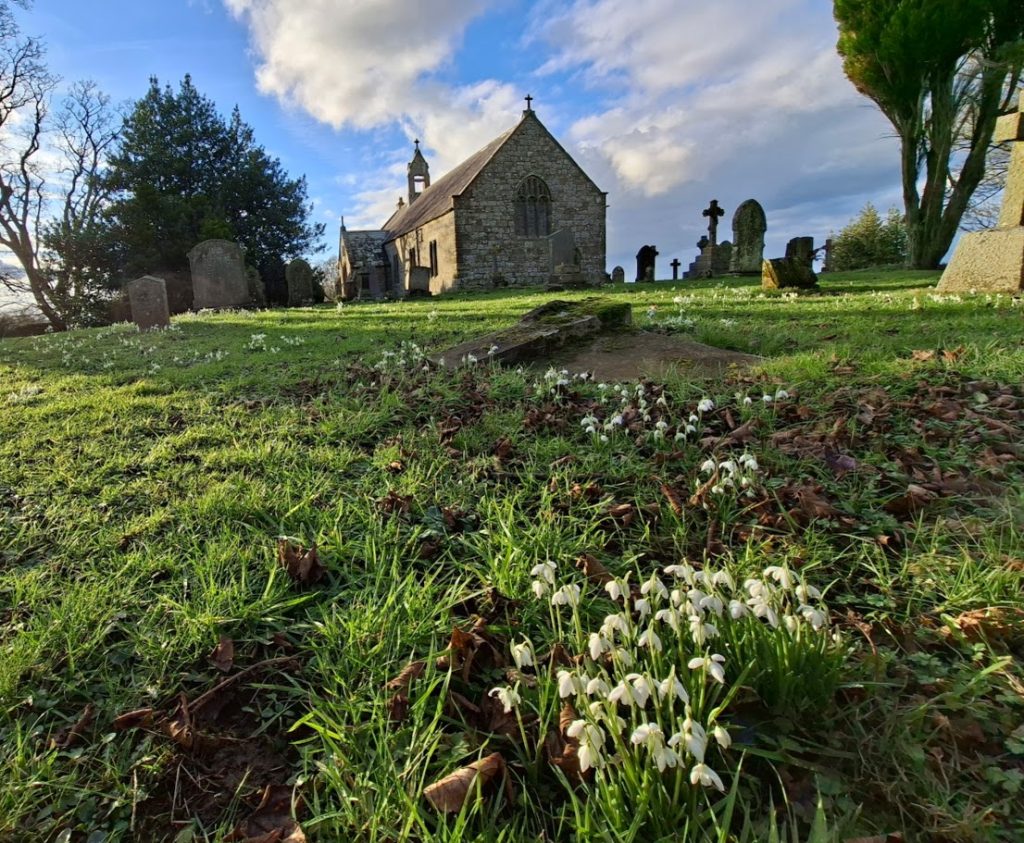
The site is believed to be the location where King Oswald (604-642) raised a large wooden cross before the Battle of Heavenfield in AD635. The battle defeated King Cadwallon ap Cadfon of Gwynedd and Oswald took a Northumbrian victory. A walled churchyard stands within the field and is home to St Oswald’s Church.
The church itself is a haven of peace and tranquility and, with no electricity, the church services held there a few times a year are lit by candles. The remains of a roman alter stone can be found inside the church and a large timber cross stands at the nearby roadside on the presumed site of the original cross erected by Oswald himself. Even today the church is a destination for pilgrims and there is an annual pilgrimage service from Hexham Abbey on St Oswald’s Day.
St Oswald’s Church is without doubt a special place and although the church we see now is primarily 19th century, the sense of age and history is palpable.
The rich history continues as the Hadrian’s
Wall National Trail runs across the field and therefore the church is a very
popular stop for walkers.
Heavenfield also marks the end of St Oswald’s Way which is a long-distance walking route, exploring some of the finest landscapes and fascinating history of Northumberland. The route links some of the places associated with St Oswald. From Holy Island (Lindisfarne) in the north, St Oswald’s Way follows the stunning Northumberland coast, before heading inland across beautiful countryside to Heavenfield and Hadrian’s Wall in the south, a distance of 97 miles. The route links castles, the coastline, islands, scenic river valleys, hills, attractive villages, forest and farmland.
Walled Churchyard
To the rear of churchyard are the most breath-taking panoramic views looking towards the North Tyne and over to the Cheviot and Simonside Hills. There is a helpful visitor panel to ensure visitors enjoy each part of this amazing landscape.
From the rear of the Church the view is outstanding
If the history isn’t enough, Heavenfield is now also a preserved hay meadow and, with a rare mix of wildflowers and grasses, we are delighted that St Oswald’s Farm is now within a higher level stewardship scheme to ensure these species are preserved. Upland hay meadows are one of the rarest grassland habitats in the country, rich in wildlife and steeped in cultural traditions. The best time of year to see the meadow in all its glory is late May to late June.
Heavenfield is always a popular spot for photographers and with dark skies overhead there is often a tripod set up as darkness falls. On a clear night it is nothing short of stunning and certainly worth staying up for.
Heavenfield has also made a few TV appearances and has featured in Robson Green’s Further Tales of Northumberland, the TV series ‘Pilgrimage’ and even ‘Vera’ and her trusty old Landrover paid a visit to this remote and remarkable little field we call home.
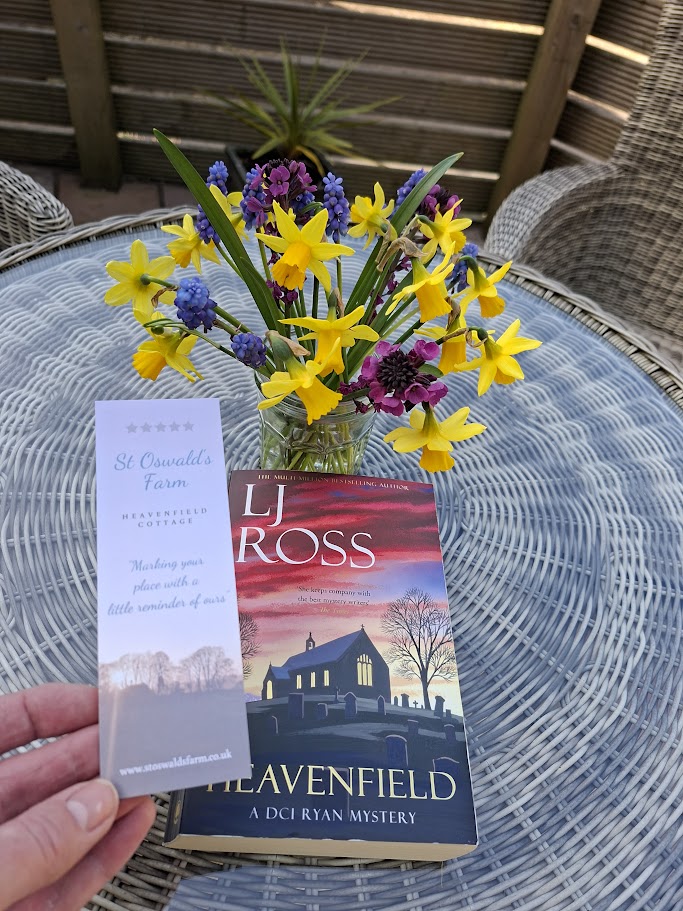
LJ Ross the author of the international No1 best-selling series of DCI Ryan mystery novels based one of her DCI Ryan books at the church and named it Heavenfield. It is of course therefore fitting that this series of books can be enjoyed by our guests here at St Oswald’s Farm.
Heavenfield is so much more than just a field and so much more than just a name we thought up. We hope that visitors to the church, to Heavenfield and to St Oswald’s Farm enjoy it as much as we do and feel the sense of peace and tranquility that can be found here.
If you’d like to stay in Heavenfield Cottage you can find out more about the area and the cottage together with prices, availability and book to stay with us here